A doctor in an Indian clinic does not need a toolkit of twenty apps. Most of the working day comes down to a few things done well: seeing the history, writing the prescription, and not losing the follow-up. This guide is about the digital tools that actually earn their place, and the ones that are mostly noise.
The tools that earn their place
A patient record you can search
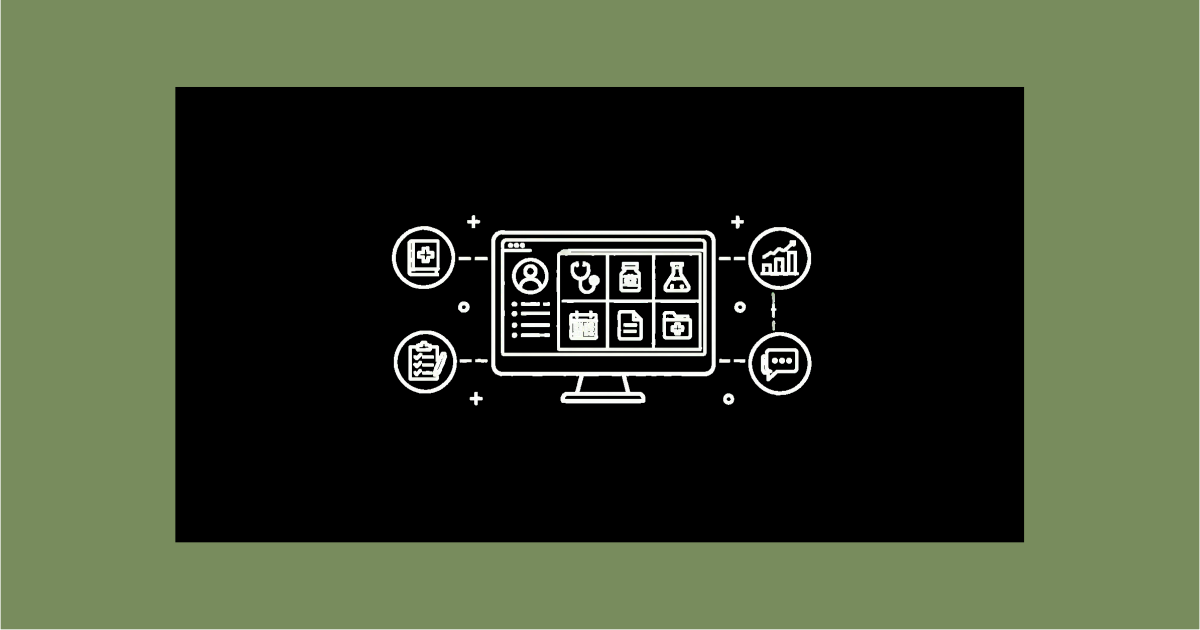
The single most useful tool is an electronic medical record: history, allergies, current medication, past prescriptions and uploaded reports, found by name or phone in seconds. It turns the start of a consultation from "remind me what we did last time" into a glance at the screen. Everything else is secondary to this.
A prescription writer with templates
Writing medicine, dose, frequency and duration once, on the clinic’s letterhead, and saving the ones you write often as templates you apply in a tap. It removes the handwriting problem at the pharmacy and, sent on WhatsApp, means the patient still has it next week. For a busy OPD this saves more time than anything else on the list.
A schedule the whole clinic shares
Doctor-wise slots that match your real timings and consultation length, with walk-ins on the same schedule and reminders going out before the visit. It is a reception tool as much as a doctor’s, but it is what keeps your day from overrunning.
Automatic follow-up prompts
A list of patients you asked to return who have not, with reminders that go out on their own. For chronic conditions this is the difference between a follow-up plan and a hope.
Useful, in the right setting
- Telemedicine / video consult: valuable for review visits and for patients who cannot travel. Not a replacement for examining someone. Has to follow the Telemedicine Practice Guidelines.
- A drug reference: a proper interactions and dosing database (not a chatbot) is worth having open for anything unfamiliar.
- Ambient note-taking: tools that draft a note from the consultation conversation can cut typing time. Treat the output as a draft you correct and sign, not a record you trust unread. Still uneven with Indian accents and code-switching.
Mostly noise for a clinic doctor
- "AI diagnosis" tools that take a text description and return a confident answer. Not validated for this, not safe to lean on.
- Wearable and remote-monitoring dashboards outside a specific chronic-care programme, a stream of data nobody has time to watch.
- Anything that needs a separate login and a separate patient list. A tool that does not read from your main record drifts out of sync within weeks.
How to judge a new tool
- Does it save time on a task you do every day, or is it impressive but occasional?
- Does it read from your existing patient record, or create a parallel one?
- What does it do with patient data, where is it processed, is it used to train someone’s model, can you turn that off? Under the DPDP Act, 2023, feeding patient data into an outside service needs a lawful basis and a proper agreement.
- Can you work without it if it is down for a day?
Where CareZenix fits
CareZenix covers the tools that earn their place for an outpatient clinic in one system: searchable patient records and EMR, a prescription writer with templates and WhatsApp delivery, a shared doctor-wise schedule, GST billing, and automatic reminders and follow-up prompts. It does not include AI diagnosis, clinical decision support or remote-monitoring dashboards, those are separate tools for specific settings, and CareZenix does not claim to be them. See it on the features page.
The takeaway
The digital tools worth a clinic doctor’s time are few: a searchable record, a prescription writer with templates, a shared schedule, and follow-up prompts. Add telemedicine and a drug reference where they fit. Be sceptical of anything that needs its own login, its own patient list, or the word "AI" to sound useful.
Related reading
Frequently Asked Questions
Insights and details about this topic.
Doctor tools are digital solutions that help healthcare professionals manage patient care, diagnosis, and workflows.
They improve efficiency, reduce errors, and enhance patient care.
EMR systems, diagnostic tools, telemedicine platforms, and prescription software.
Yes, many tools are designed for clinics of all sizes.
AI-powered systems, automation, and smart integrations will shape the future.