Introduction
Healthcare is rapidly evolving with the integration of advanced technologies. From cloud systems replacing the server in the back room to patients booking their own slots, the change is mostly in the ordinary parts of a clinic’s day.
In 2026, healthcare technology is expected to play an even bigger role in improving efficiency, patient care, and operational workflows.
In this blog, we will explore the top healthcare technology trends that are transforming clinics, hospitals, and the entire healthcare ecosystem.
Patients Book Their Own Appointments
More clinics are letting patients pick a slot themselves, from the clinic’s own website rather than a listing site.
That changes three things:
- The front desk stops spending its morning on the phone
- Bookings arrive already in the calendar, not on a notepad
- The clinic keeps the patient relationship instead of renting it from a marketplace
The practices that gain most are the ones whose patients were already trying to book on WhatsApp.
Cloud-Based Healthcare Systems
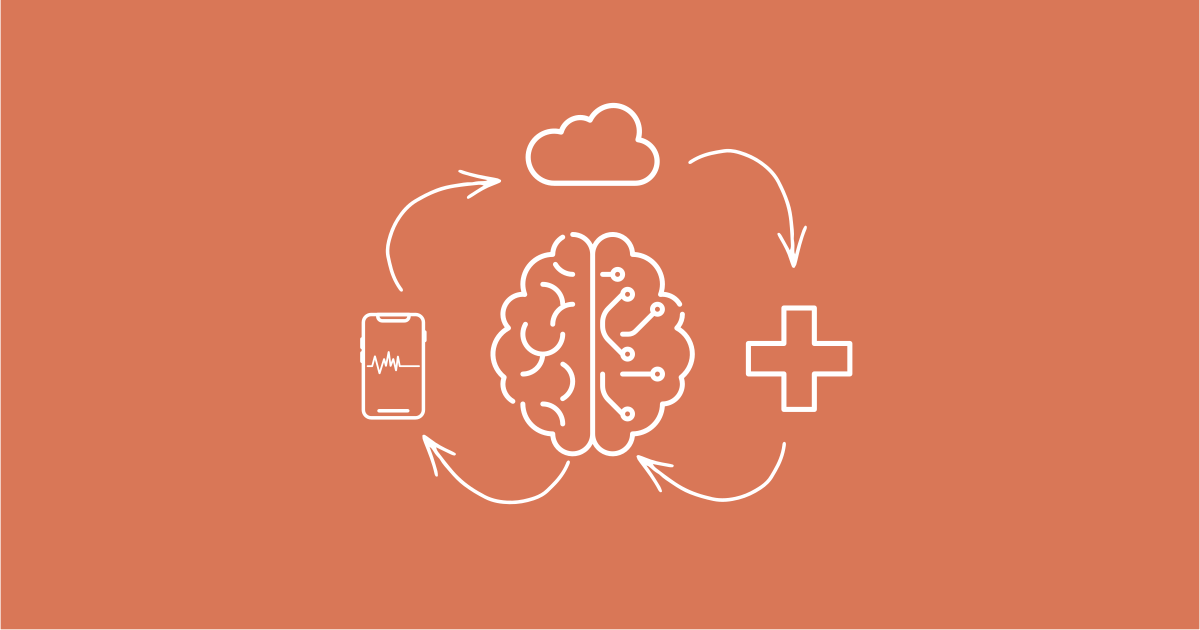
Cloud technology is transforming how healthcare data is stored and accessed.
Cloud-based systems allow:
- Secure data storage
- Remote access to patient records
- Easy scalability
This enables healthcare providers to manage operations efficiently without relying on physical infrastructure.
Growth of Telemedicine
Telemedicine has become an essential part of modern healthcare.
Patients can now consult doctors remotely, reducing the need for physical visits. This improves accessibility, especially in remote areas.
Telemedicine also helps healthcare providers manage more patients efficiently.
Digital Patient Management Systems
Digital systems are replacing traditional paper-based processes.
Patient management systems help:
- Store patient data securely
- Manage appointments
- Improve communication
These systems enhance workflow efficiency and reduce errors.
Integration of Healthcare Systems
Modern healthcare relies on integrated systems.
Technologies such as:
- Hospital management systems
- Clinic management systems
- Lab management software
are now connected so nothing is copied by hand between them.
This integration ensures better coordination and improved patient care.
Automation in Healthcare Workflows
Automation is reducing manual work in healthcare.
Tasks such as:
- Appointment scheduling
- Billing
- Notifications
are now automated using software.
This improves efficiency and allows healthcare providers to focus more on patient care.
Data Analytics and Decision Making
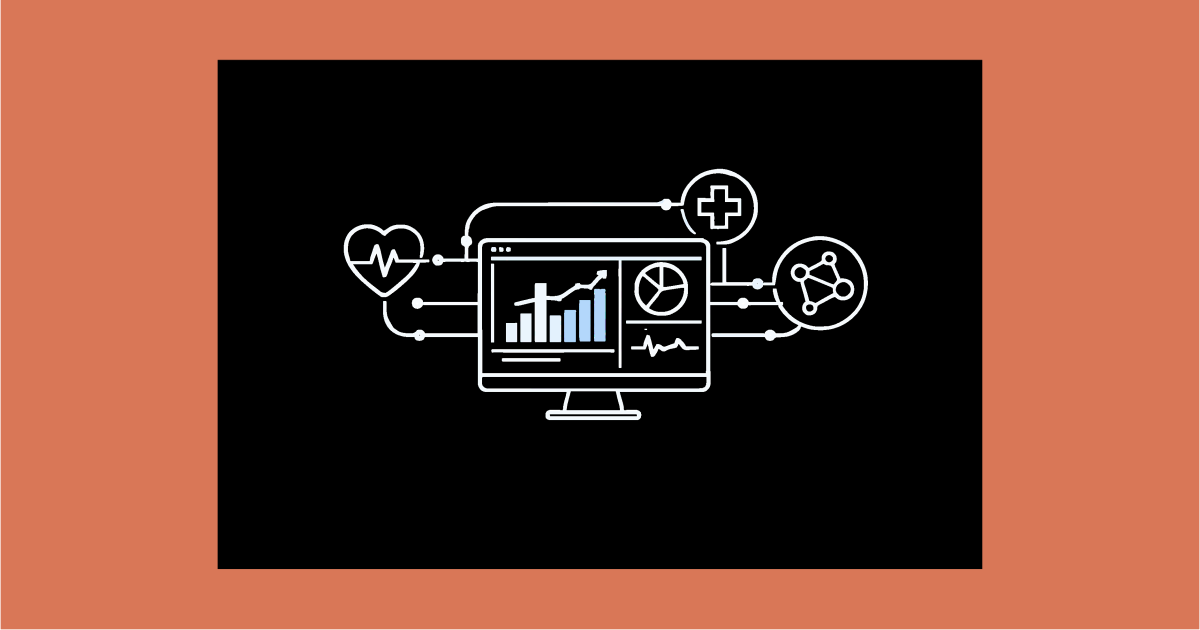
Healthcare organizations are increasingly using data analytics.
Analytics helps in:
- Understanding patient trends
- Improving operational efficiency
- Making better decisions
Data-driven insights are becoming essential for modern healthcare management.
Mobile Healthcare Applications
Mobile apps are making healthcare more accessible.
Patients can:
- Book appointments
- Access reports
- Communicate with doctors
Mobile technology improves convenience and enhances patient engagement.
Cybersecurity in Healthcare
With digital transformation, data security has become critical.
Healthcare systems store sensitive patient information, making them targets for cyber threats.
Advanced security measures and encryption are essential to protect patient data.
Future of Healthcare Technology
The future of healthcare technology is focused on:
- Software that covers the whole visit rather than one department
- Records that follow the patient between doctors
- Messages that reach the patient where they already are
- Pricing a single-doctor practice can afford
Technology will continue to evolve, making healthcare more efficient, accessible, and patient-centric.
Conclusion
Healthcare technology is transforming the way clinics and hospitals operate.
Cloud systems, digital records and patient messaging are doing most of the work, and none of them need a server sitting in the clinic.
Staying updated with these trends is essential for healthcare providers to remain competitive and deliver better services.
Related reading
Frequently Asked Questions
Insights and details about this topic.
They are innovations and advancements such as AI, cloud systems, and automation that improve healthcare services.
It improves efficiency, enhances patient care, and reduces operational costs.
The future includes AI-driven systems, integrated platforms, and personalized healthcare solutions.
AI is used for diagnosis, automation, and predicting patient outcomes.
It enables secure data storage, remote access, and scalability.