Introduction
Healthcare organizations are increasingly adopting cloud technology to improve efficiency and scalability. Traditional software systems often require complex infrastructure and maintenance, making them difficult to manage for growing healthcare facilities.
A cloud-based hospital management system allows clinics and hospitals to manage patient records, appointments, consultations, and reports through a secure online platform.
If you want to understand how hospital software works overall, start with our complete guide on Hospital Management Systems.
In this article, we explore how cloud hospital management systems improve healthcare operations and patient care.
What is a Cloud-Based Hospital Management System?
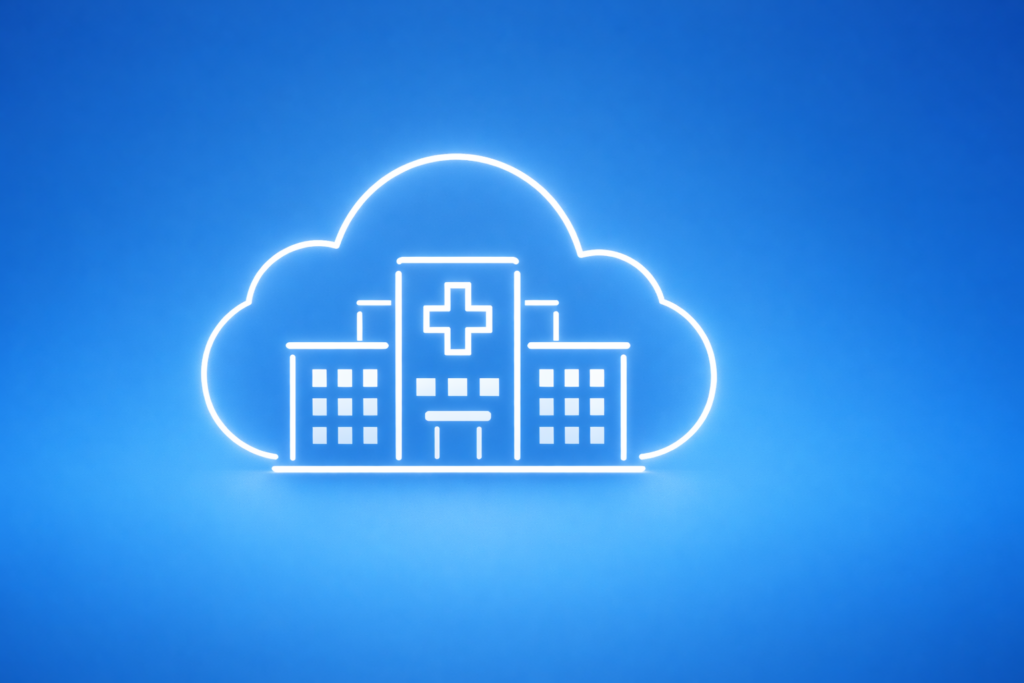
A cloud-based hospital management system is healthcare software hosted on cloud infrastructure rather than installed locally on hospital servers.
This allows healthcare providers to access the system through secure internet access from different locations.
Cloud healthcare systems typically manage:
- Patient records
- Appointment scheduling
- OPD consultations
- Diagnostic reports
- Billing and financial tracking
Cloud platforms simplify hospital operations while reducing infrastructure costs.
Key Features of Cloud Hospital Management Systems
Digital Patient Records
Cloud systems allow clinics to maintain centralized patient data using a patient management system.
Patient records may include:
- Patient personal details
- Medical history
- Prescriptions
- Consultation records
- Diagnostic reports
Learn more in our guide on Patient Management Systems.
Online Appointment Scheduling
Cloud platforms make appointment management easier by allowing doctors and clinic staff to schedule appointments digitally.
Features include:
- Appointment booking
- Doctor schedule management
- Patient visit tracking
- Appointment reminders
Many healthcare systems also integrate OPD Management Systems to manage outpatient visits efficiently.
Electronic Medical Records
Cloud healthcare systems rely on electronic medical records (EMR) to store patient medical data securely.
EMR systems help clinics manage:
- Consultation notes
- Prescriptions
- Treatment history
- Diagnostic reports
Learn more about digital records in our guide on Electronic Medical Records.
Lab Report Management
Cloud healthcare systems allow diagnostic reports to be stored digitally.
Using integrated Lab Management Software, doctors can access lab results directly within patient records.
This improves diagnosis and treatment planning.
Benefits of Cloud Hospital Software
Remote Accessibility
Healthcare providers can access the system from anywhere with internet access.
This helps doctors and clinic administrators manage operations even when they are not physically present at the facility.
Lower Infrastructure Costs
Cloud systems eliminate the need for expensive hardware and server maintenance.
Healthcare providers only need internet access to operate the system.
Automatic Software Updates
Cloud platforms automatically update software features and security patches.
This ensures healthcare providers always use the latest version of the system.
Secure Data Storage
Cloud healthcare systems store patient data in secure servers with encryption and access control mechanisms.
This ensures patient privacy and data protection.
Scalability
Cloud systems allow healthcare providers to scale operations easily as clinics grow.
Healthcare facilities can manage increasing patient volumes without upgrading infrastructure.
How CareZenix Uses Cloud Technology
CareZenix is designed as a modern healthcare platform that helps clinics, hospitals, and diagnostic centers manage healthcare operations efficiently.
The platform provides tools for:
- Patient record management
- Appointment scheduling
- OPD consultation tracking
- Lab report management
- Billing and invoicing
- Healthcare analytics
You can explore the platform capabilities on the CareZenix Features Page.
Conclusion
Cloud-based hospital management systems are transforming healthcare operations by providing scalable, secure, and accessible digital platforms.
Healthcare providers that adopt cloud healthcare software can streamline workflows, improve patient management, and reduce operational costs.
Platforms like CareZenix enable clinics and hospitals to manage healthcare services efficiently while improving patient care.
Frequently Asked Questions
Insights and details about this topic.
A cloud hospital management system is healthcare software hosted on cloud infrastructure that allows clinics and hospitals to manage patient data and operations online.
Hospitals use cloud software because it provides remote access, automatic updates, better scalability, and reduced infrastructure costs.
Yes. Most cloud healthcare systems use secure servers, encryption, and access controls to protect patient data.
Yes. Cloud healthcare software is ideal for small clinics because it does not require complex infrastructure and can be accessed from anywhere.