Introduction
For many years, clinics and hospitals relied on paper records to manage patient information. Files were stored physically, and doctors depended on handwritten notes to track medical history and treatments.
However, with the rise of digital healthcare, Electronic Medical Records (EMR) have become the preferred choice for modern clinics. This shift has transformed how patient data is stored, accessed, and managed.
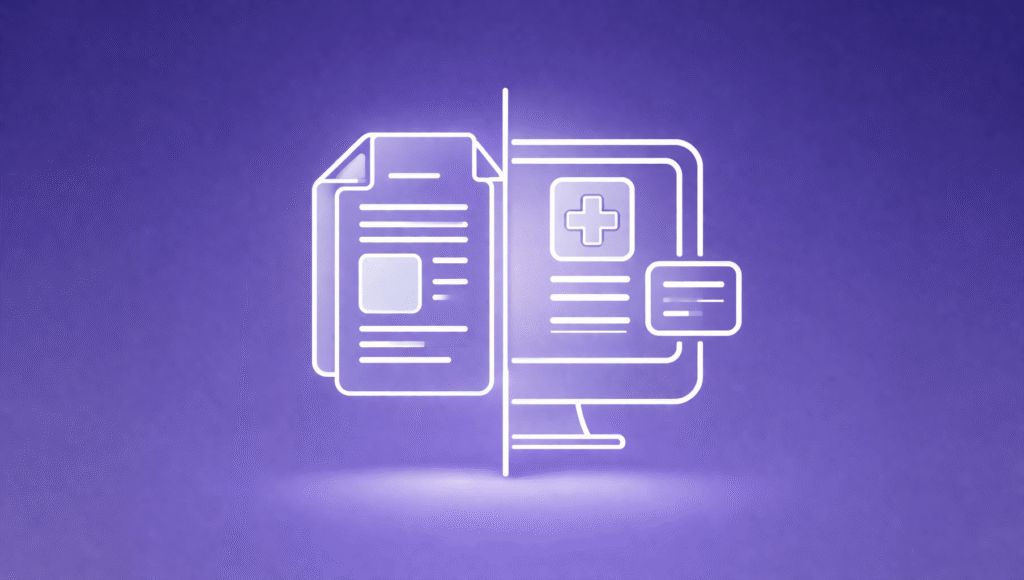
In this guide, we will compare EMR vs paper records, understand their differences, and help you decide which is better for your clinic.
What are Paper Medical Records?
Paper medical records are physical documents used to store patient information. These include handwritten notes, prescriptions, diagnostic reports, and treatment history.
Each patient typically has a file that is stored in a clinic or hospital. Doctors must manually search and update these records during every visit.
While this method has been used for decades, it comes with several limitations in today’s fast-paced healthcare environment.
What are Electronic Medical Records (EMR)?
Electronic Medical Records (EMR) are digital versions of patient records stored in software systems.
They include all patient information such as medical history, prescriptions, diagnoses, test results, and treatment plans. EMR systems allow doctors to access and update records instantly using a computer or mobile device.
Unlike paper records, EMR systems are organized, searchable, and easy to manage.
Key Differences Between EMR and Paper Records
The main difference lies in accessibility and efficiency.
Paper records require manual handling and physical storage, making them difficult to manage as patient numbers grow. Finding specific information can take time, especially in busy clinics.
EMR systems, on the other hand, allow instant access to patient data. Doctors can retrieve records in seconds, which improves workflow and saves time.
Another major difference is accuracy. Paper records are prone to errors due to illegible handwriting or misplaced files. EMR systems reduce these risks by maintaining structured and clear data.
Advantages of EMR Over Paper Records
EMR systems offer several advantages that make them ideal for modern healthcare.
They provide quick access to patient information, which helps doctors make faster and more accurate decisions. They also eliminate the need for physical storage, reducing clutter and administrative effort.
Data security is stronger in EMR systems, as they use encryption and controlled access. This ensures that patient information remains safe and confidential.
EMR systems also support better coordination between healthcare providers, improving overall patient care.
Limitations of Paper Records
Paper records have several drawbacks in today’s digital age.
They require physical storage space, which increases as the clinic grows. Managing large volumes of files becomes difficult and time-consuming.
There is also a higher risk of data loss due to damage, misplacement, or human error. Additionally, sharing records between different healthcare providers is challenging.
These limitations make paper records less suitable for modern clinics.
Are There Any Advantages of Paper Records?
Despite their limitations, paper records do have some basic advantages.
They do not require technology or internet access, making them easy to use in low-resource settings. There are also no software costs involved.
However, these benefits are outweighed by the inefficiencies and risks associated with manual record management.
Why Clinics Are Moving to EMR Systems
Modern clinics are adopting EMR systems to improve efficiency and patient care.
Digital systems allow doctors to manage large volumes of patient data without increasing workload. They also support automation, which reduces administrative tasks.
As healthcare becomes more data-driven, EMR systems help clinics stay competitive and future-ready.
Challenges in Switching to EMR
Transitioning from paper to digital systems can have initial challenges.
Clinics may need to invest time in training staff and migrating existing data. There may also be concerns about adapting to new technology.
However, once implemented, EMR systems significantly improve workflow and reduce long-term effort.
Future of Medical Records
The future of healthcare is fully digital.
EMR systems are evolving with features like artificial intelligence, cloud storage, and integration with telemedicine platforms. These advancements will further improve patient care and clinic efficiency.
Paper records are gradually becoming obsolete as digital solutions continue to grow.
Conclusion
When comparing EMR vs paper records, it is clear that EMR systems offer significant advantages for modern clinics.
They improve efficiency, reduce errors, enhance data security, and provide better patient care. While paper records may still be used in some cases, they are no longer suitable for growing healthcare practices.
Adopting EMR is an important step toward building a modern, efficient, and future-ready clinic.