"CRM" comes from sales software, and in healthcare the term makes some people uneasy, patients are not leads. But the underlying job is legitimate: keeping in touch with the people your clinic already treats, so a follow-up is not missed and a recall actually goes out. This guide explains what a clinic CRM covers, where it overlaps with your clinic management system, and where the line is.
What a clinic CRM actually means
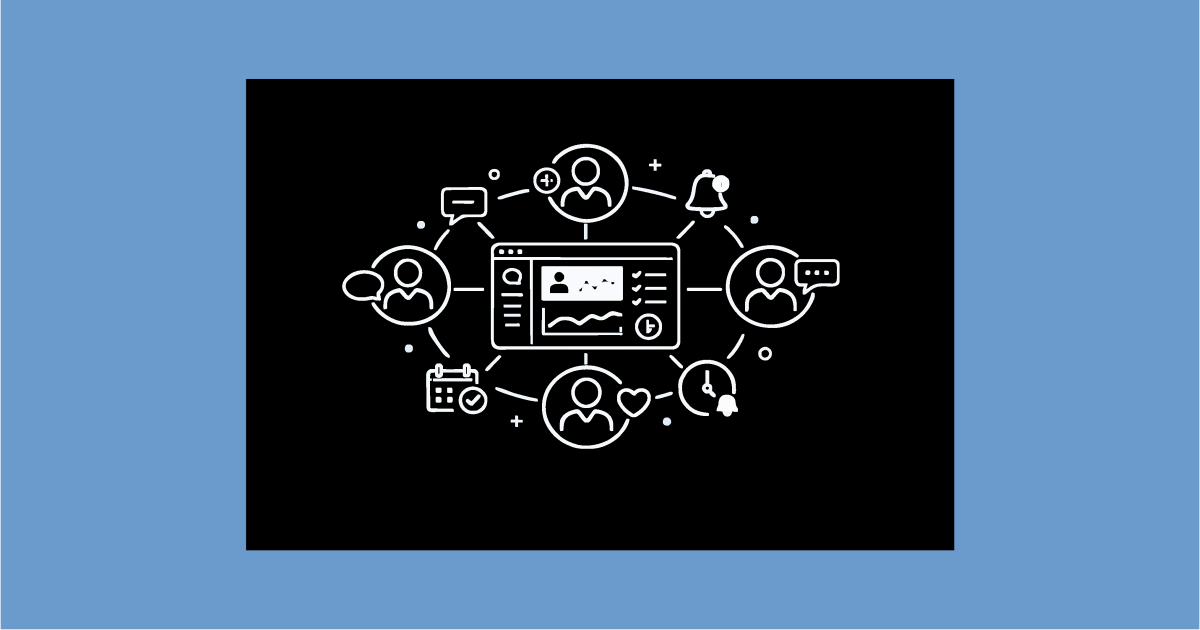
Stripped of the jargon, it is the communication and follow-up layer:
- Appointment reminders and confirmations by SMS or WhatsApp.
- Recalls, the diabetic patient due for a quarterly review, the child due for a vaccination.
- Post-visit follow-up, a check-in message after a procedure.
- Health-day or camp information to relevant patients.
- A record of contact, what was sent, when, and whether the patient responded.
Note what is not on that list: cold outreach, buying contact lists, or messaging people who never consented. In Indian healthcare, and under the DPDP Act, communication is to your own patients, for care-related reasons, with consent taken at registration.
A clinic CRM versus your clinic management system
A clinic or patient management system runs operations, registration, appointments, records, billing. A CRM layer runs the relationship, reminders, recalls, follow-up, engagement tracking. In practice, for most clinics these are not separate products: the clinic system sends the reminders and flags the recalls, and that is enough. A standalone healthcare CRM makes sense mainly for larger groups running structured recall programmes or multi-location campaigns.
Specialty clinics run different recall cycles
This is where a clinic CRM earns its keep, and it is why a generic tool rarely fits. The recall that matters is different in every practice. A diabetology clinic is chasing a quarterly HbA1c. A paediatric practice is chasing a vaccination schedule fixed by the child’s age rather than by the date of the last visit. A dental practice is chasing a six-month cleaning. A dermatology practice partway through a course of treatment is chasing a four-week review.
A multi-speciality clinic runs several of these at once under one roof, and that is the case a single shared patient list handles worst. What works is a rule per speciality, running off the records themselves rather than off a spreadsheet somebody has to maintain: flag this group of patients, this many days after this event. If a vendor can only offer one blanket reminder rule for the whole clinic, it will not serve a multi-speciality practice for long.
What to look for, if you do want a dedicated one
- WhatsApp first. In India, patients read WhatsApp and ignore email. Reminder and recall delivery over WhatsApp Business, with SMS fallback, matters more than any other channel feature.
- Rules you can define. "Flag every diabetic patient 90 days after their last visit" should be a setting, not a manual list you rebuild each month.
- It reads from your records. A CRM that needs a separate patient list will drift out of sync within weeks.
- Consent and opt-out. Per-patient control over what messages go out, and an easy way for a patient to stop non-essential ones.
- A contact log. What was sent and whether it landed, visible on the patient record.
Data protection is central here
CRM is the part of healthcare software most likely to cross a line. Messaging patients for care reasons on consent they gave at registration is fine. Using their contact details for anything they did not agree to, promotional campaigns, sharing with a third party, is not, and the DPDP Act treats it as a breach. Any CRM you use should make transactional, consented communication easy and make everything else hard.
A note on message costs and templates
WhatsApp Business messaging is not free and not instant to set up. Template messages have to be registered and approved before they can be sent, and each message carries a small per-conversation cost that is billed on actual usage, separate from your software subscription. This is worth knowing before you plan a recall programme: a few hundred reminders a month is a modest cost; a large untargeted campaign is not, and it is also the kind of use that gets a sender’s number rate-limited. Keep messaging tied to a care reason and a defined patient list and both the cost and the compliance stay manageable.
Where CareZenix fits
CareZenix builds the useful part of this into the clinic system rather than selling it separately: automatic appointment confirmations and reminders, prescriptions and invoices delivered on WhatsApp with SMS fallback, per-purpose switches so you choose what goes out, and an outbox showing what was sent and whether it arrived. Messages carry your clinic’s name, not the platform’s. It is not a marketing-campaign tool, and it is not meant to be.
The takeaway
A clinic CRM, done properly, is just disciplined follow-up with your own patients: reminders that go out, recalls that are not forgotten, and a record of contact. For most clinics that belongs inside the clinic system. A separate CRM is for larger groups with formal recall programmes, and whichever you use, it should keep communication transactional and consented, because that is where the legal line sits.
Related reading
Frequently Asked Questions
Insights and details about this topic.
It is a system used to manage patient communication, engagement, and relationships.
It improves patient communication, reduces missed appointments, and enhances engagement.
Yes, it integrates with PMS, HMS, and EMR systems.
Yes, it helps small clinics improve patient retention and communication.
It improves patient experience and builds long-term relationships.