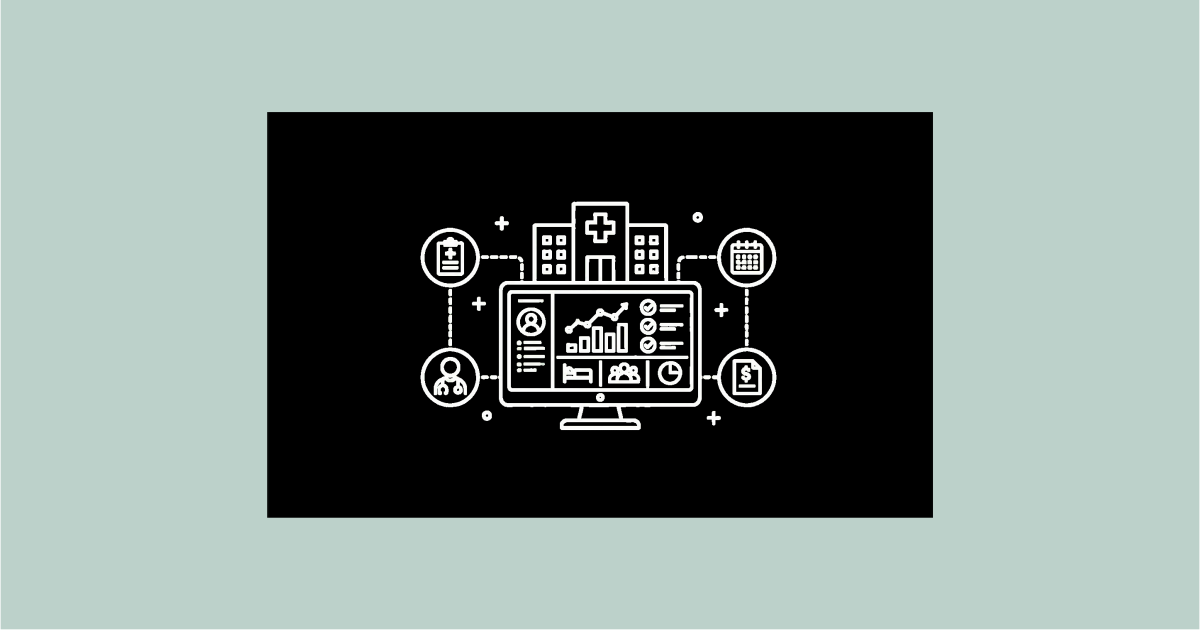
A management system does not treat patients. What it does is remove the friction around treatment, the missing file, the double-booked slot, the prescription nobody can read, the follow-up nobody chased. This guide is concrete about how each of those improvements actually reaches the patient.
For the fundamentals, see our guide to hospital and clinic management systems.
The record is there when the doctor needs it
The clearest gain is that a patient’s history stops depending on a physical file being in the right place. History, allergies, current medication, past prescriptions and uploaded reports are on the screen in the consultation room, found by name or phone in seconds. The doctor spends the visit on the patient rather than on reconstructing what happened last time.
Shorter, more predictable waits
Doctor-wise slots that respect each doctor’s real timings and consultation length stop reception from overbooking. Walk-ins go onto the same schedule rather than a parallel queue. The patient waits closer to their appointment time, and knows roughly how long it will be.
Prescriptions that can be read and kept
A typed prescription on the clinic’s letterhead removes the handwriting problem at the pharmacy, and sending it to the patient on WhatsApp means they still have it a week later when they have lost the paper. Repeat prescriptions saved as templates mean the regular ones are consistent visit to visit.
Follow-ups that actually happen
When the system knows a patient was asked to return, it can flag the ones who have not, and send reminders automatically. A follow-up that would have depended on the patient remembering now depends on the system prompting them, which is a real difference in outcomes for chronic conditions.
Fewer errors in the boring places
Registration with an automatic patient ID reduces duplicate records. Billing generated from the visit reduces wrong charges. An audit trail means a change to a record is attributable. None of this is dramatic, but errors in registration and billing are exactly the things that erode a patient’s trust in a clinic.
Continuity when staff change
In a clinic that runs on one experienced receptionist’s memory and one cupboard of files, a resignation or a long illness is a genuine disruption, the new person spends weeks learning where things are and which patient is which. When the record lives in a system, that knowledge is not tied to a person. A patient who comes in on the day a long-serving staff member has left still gets a doctor who can see their full history. For the patient, the clinic simply keeps working.
What it does not do
It is worth being plain: a management system does not diagnose, does not decide treatment, and does not make a rushed consultation unrushed. If the underlying problem is too many patients booked into too little time, software will make the booking tidier but not the visit longer. The gains here are real but they are about removing friction around care, not about the care itself.
Access limited to what each role needs
Reception can see appointments and billing but not clinical notes. Access is set per person by role, typically reception, doctor and admin, and patient contact details are encrypted where they are stored. The patient’s clinical information is seen by the people treating them, not by everyone with a login.
Outside test reports in one place
Clinics routinely send patients to an external lab. The management system does not run that lab, but the finished report can be attached to the patient’s record, so at the next visit the result is with the history rather than in the patient’s bag. For a clinic with its own in-house lab at volume, that is a separate lab system’s job.
Where CareZenix fits
CareZenix is an outpatient clinic system covering exactly this ground: records and EMR, appointments, branded digital prescriptions, GST billing, an embeddable booking widget, and WhatsApp and SMS reminders. It is deliberately not a hospital suite, no wards, no lab module, no pharmacy, so it stays quick for a small clinic’s staff to learn. Full scope on the features page.
The takeaway
A management system improves patient care indirectly but measurably: the record is present, the wait is shorter, the prescription is legible and kept, the follow-up is prompted, and the routine errors that annoy patients happen less. Choose one built for the kind of practice you run, and those gains show up within weeks.
Related reading
Frequently Asked Questions
Insights and details about this topic.
Hospital management software improves patient care by providing instant access to patient records, organizing appointments, and improving communication between healthcare teams.
Digital patient records allow doctors to access medical history quickly, improving diagnosis and treatment decisions.
Yes. Appointment scheduling systems help clinics organize patient visits efficiently, reducing waiting times.
Yes. Hospital systems help doctors manage patient records, appointments, diagnostic reports, and treatment history efficiently.