Introduction
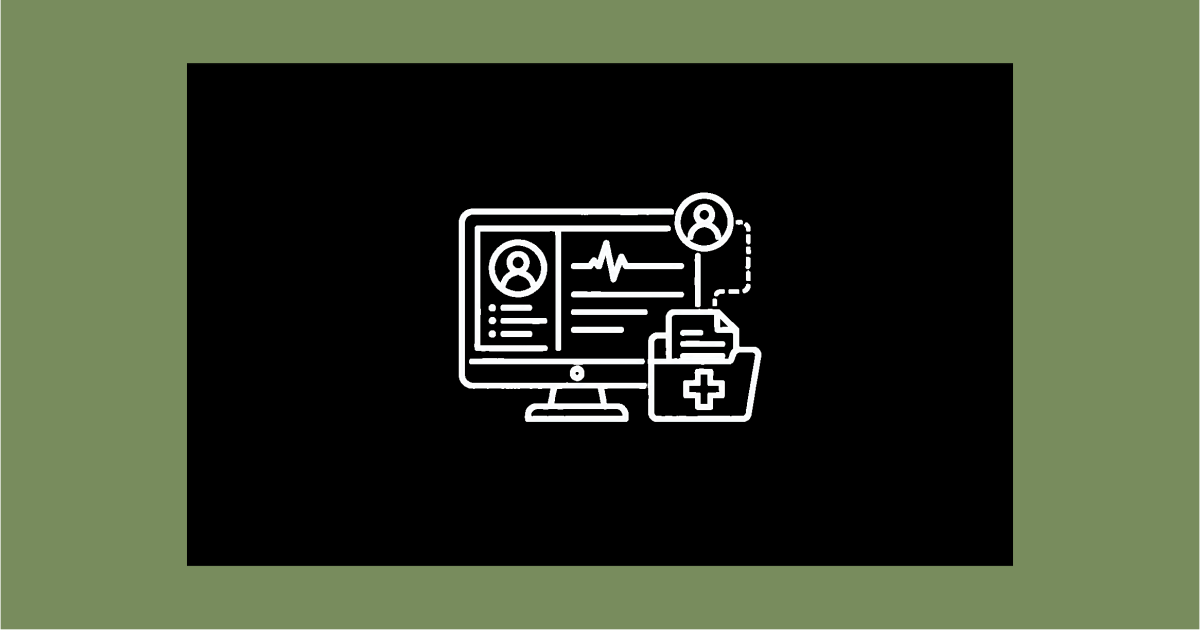
In modern healthcare, digital systems are essential for managing patient data and improving efficiency. Two commonly used systems are Patient Management Systems (PMS) and Electronic Medical Records (EMR).
While both deal with patient information, they serve different purposes. Many clinics and hospitals often confuse the two, leading to incorrect implementation.
In this guide, we will clearly explain the difference between PMS and EMR, their features, and which one is right for your healthcare facility.
What is a Patient Management System (PMS)?
A Patient Management System is designed to handle the administrative and operational aspects of a healthcare facility.
It includes:
- Patient registration
- Appointment scheduling
- Billing and payments
- Communication and reminders
The main goal of a PMS is to streamline clinic operations and improve workflow efficiency.
What is an Electronic Medical Record (EMR)?
An Electronic Medical Record focuses on storing and managing clinical data.
It includes:
- Patient medical history
- Diagnoses and treatments
- Prescriptions
- Lab reports
The main purpose of an EMR is to help doctors make accurate clinical decisions by providing complete patient history.
Key Differences Between PMS and EMR
Purpose
PMS is focused on operations and management, while EMR is focused on clinical data and treatment.
Data Type
PMS handles administrative data like appointments and billing, while EMR handles medical data such as diagnoses and prescriptions.
Users
PMS is mainly used by front desk staff and administrators, whereas EMR is primarily used by doctors and healthcare professionals.
Functionality
PMS improves workflow and patient flow, while EMR improves diagnosis and treatment quality.
How PMS and EMR Work Together
In modern healthcare systems, PMS and EMR are often integrated so nothing is copied by hand between them.
For example:
- A patient registers through PMS
- The doctor accesses medical history through EMR
- Billing is processed through PMS
This integration creates a complete healthcare ecosystem where both operational and clinical data work together.
Benefits of Using PMS and EMR Together
Using both systems together provides maximum efficiency:
- Ensures smooth patient flow
- Maintains accurate medical records
- Improves coordination between staff and doctors
- Enhances overall patient care
Doctors get complete patient insights, while staff can manage operations efficiently.
Which One Do You Need?
The choice depends on your healthcare facility’s requirements.
- Small clinics may start with PMS for operational management
- Growing clinics should add EMR for clinical data management
- Hospitals should use both systems together for complete functionality
Common Mistakes to Avoid
Many healthcare providers make mistakes when choosing software:
- Focusing only on EMR and ignoring operational needs
- Using PMS without proper medical data management
- Choosing systems that do not integrate easily
Selecting a solution that supports both functions or integrates seamlessly is essential.
Future of Healthcare Systems
Healthcare systems are evolving toward integrated platforms.
- Combined PMS, EMR, lab management, and billing systems
- Cloud-based healthcare platforms
- Reports a clinic owner can read without a spreadsheet
These advancements will reduce complexity and improve efficiency in healthcare management.
Conclusion
Patient Management Systems and Electronic Medical Records serve different but equally important roles in healthcare.
PMS improves operational efficiency, while EMR enhances clinical decision-making. Together, they create a powerful system for modern healthcare facilities.
Choosing the right combination helps clinics and hospitals deliver better care and improve overall performance.
Related reading
Frequently Asked Questions
Insights and details about this topic.
PMS manages operations like appointments and billing, while EMR stores medical records and clinical data.
Yes, using both ensures efficient operations and accurate patient care.
Yes, but it will lack clinical data management capabilities.
No, EMR alone does not handle administrative tasks like scheduling and billing.
An integrated system that combines PMS and EMR is the best option.