Introduction
Managing patient information efficiently is one of the biggest challenges for clinics and hospitals. From registration to treatment history, handling patient data manually can lead to errors, delays, and poor coordination.
A patient management system (PMS) helps healthcare providers streamline operations, improve data accuracy, and enhance patient care.
In this guide, we will cover everything you need to know about patient management systems and how they transform modern healthcare.
What is a Patient Management System?
A patient management system is a digital solution designed to manage patient-related information and workflows in healthcare facilities.
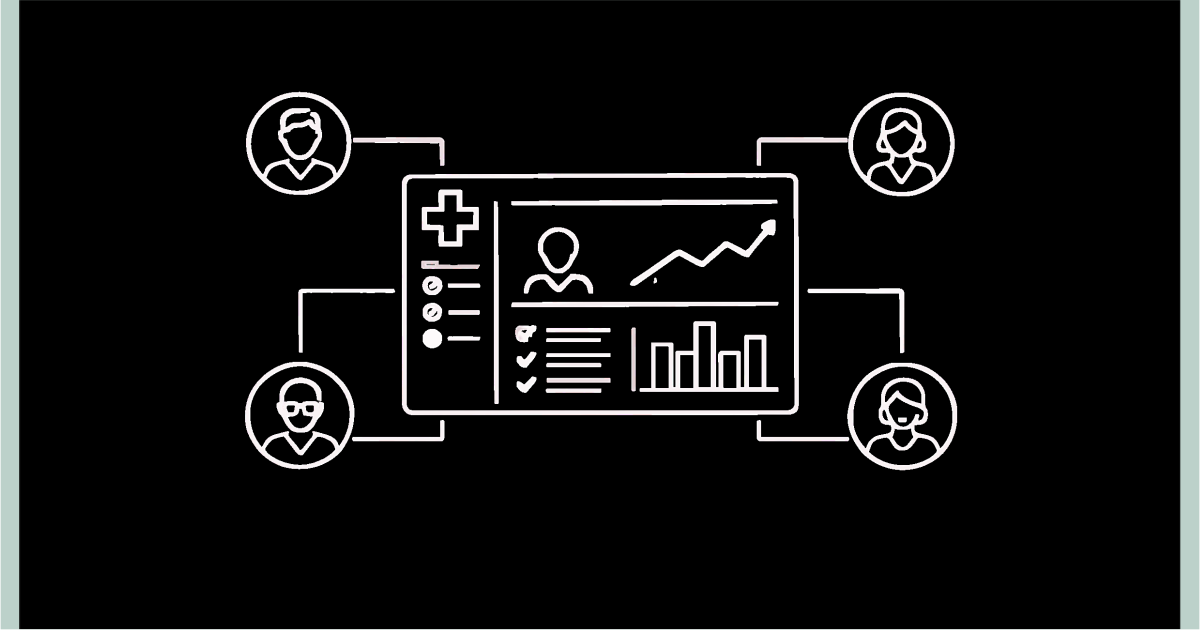
It includes patient registration, medical records, appointment scheduling, billing, and communication—all in one centralized system.
This helps clinics and hospitals replace manual processes with efficient digital workflows.
Why Patient Management is Important
Efficient patient management is essential for delivering quality healthcare.
Poor management can lead to:
- Misplaced patient records
- Delays in treatment
- Communication gaps between staff and doctors
This directly affects patient experience and clinic efficiency.
A structured system ensures smooth operations, better coordination, and improved patient satisfaction.
Key Features of a Patient Management System
A modern patient management system includes several important features:
- Patient Registration: Quick and accurate data entry
- Electronic Medical Records: Secure and accessible patient history
- Appointment Scheduling: Efficient doctor and patient management
- Billing Integration: Fast and accurate payment processing
- Communication Tools: Reminders and notifications for better engagement
Benefits of Patient Management Software
Using a patient management system offers multiple benefits:
- Improves efficiency by automating routine tasks
- Enables instant access to patient data
- Reduces manual errors and improves accuracy
- Supports handling higher patient volumes
- Enhances overall patient experience
How PMS Improves Patient Experience
Patient experience is a key factor in healthcare success.
With a PMS, patients can:
- Book appointments easily
- Receive automated reminders
- Avoid repeating medical history
- Experience faster check-ins and consultations
Better communication and reduced waiting time improve trust and satisfaction.
Patient Management System vs Manual System
Manual systems rely on paper records and physical processes, which can lead to inefficiencies and data loss.
In contrast, a digital PMS offers:
- Better organization of patient data
- Faster access to records
- Improved accuracy and reduced errors
- Scalability as patient numbers grow
Integration with Other Healthcare Systems
Modern patient management systems can integrate with other healthcare tools.
They can connect with OPD systems, lab management software, and billing platforms, creating a seamless workflow.
This ensures that patient data flows across departments without duplication, improving coordination and care.
How to Choose the Right PMS
Choosing the right system depends on your clinic’s needs:
- Small clinics may need basic features
- Hospitals require advanced systems with integrations
- Ease of use is essential for staff adoption
- Cloud-based solutions offer flexibility and scalability
- Consider pricing, support, and customization options
Future of Patient Management Systems
The future of patient management is driven by technology:
- Artificial intelligence for data analysis
- Cloud-based systems for accessibility
- Mobile apps for patient interaction
- Advanced analytics for better decision-making
These advancements will make patient management systems more efficient and patient-focused.
Conclusion
A patient management system is essential for modern healthcare facilities.
It improves efficiency, reduces errors, and enhances patient experience. By digitizing workflows and organizing data, clinics and hospitals can deliver better care.
Investing in the right PMS is a crucial step toward building a smart and efficient healthcare system.
Frequently Asked Questions
Insights and details about this topic.
It is a digital system used to manage patient records, appointments, billing, and communication in healthcare facilities.
It improves efficiency, reduces errors, and enhances patient experience by organizing workflows.
Yes, many systems are designed specifically for small clinics and are easy to use.
It should include registration, medical records, scheduling, billing, and communication tools.
Yes, most modern systems use secure encryption and access control to protect patient data.