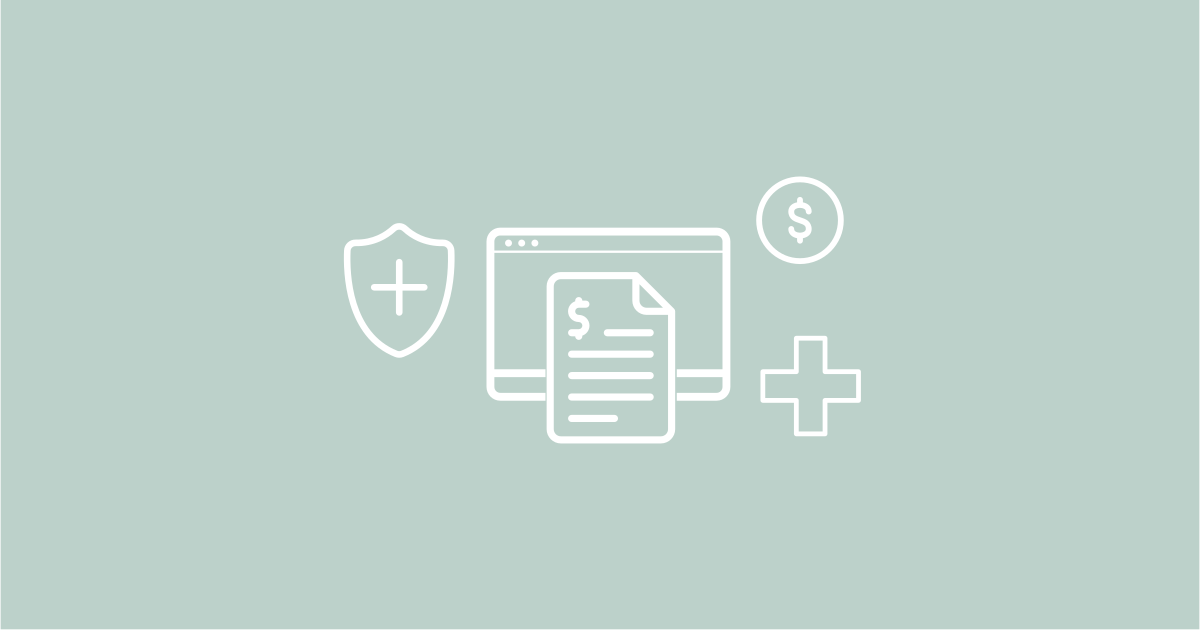
Billing is where a clinic quietly loses money: a consultation not entered, a package rate applied wrongly, an outstanding amount nobody chased. Medical billing software exists to close those gaps. This guide explains what it does, what to look for in India, and how it differs from insurance-claims software, which is a separate thing.
What medical billing software does
- Generates the invoice from what actually happened at the visit (consultation, procedures, any items) rather than from someone’s memory of it.
- Applies the right rate for walk-in, package, corporate or camp patients, so discounting is deliberate rather than accidental.
- Handles GST, correct invoice numbering, tax breakdown, your GSTIN, and the formats your accountant needs at filing time.
- Tracks payment, paid, part-paid, outstanding, by patient and by day, including cash, card, UPI and online.
- Reports collection, revenue by doctor, by service and by period, and an ageing list of what is still owed.
- Shares the bill, a printed receipt or a link the patient can open on their phone.
Billing software vs claims software
These get conflated. Billing software produces invoices and tracks payment for the clinic. Insurance-claims or TPA software submits and tracks reimbursement claims to insurers and third-party administrators, with cashless pre-authorisation, claim coding and denial management. A cash-pay outpatient clinic needs the first and not the second. A hospital doing cashless admissions needs both. Be clear which problem you are solving before you shortlist.
Why manual billing leaks
- Unbilled work. A procedure done and never entered on the bill.
- Rate errors. The corporate rate applied to a walk-in, or the other way round.
- Lost track of dues. "They said they’ll pay next visit" and no record of it.
- Reconciliation guesswork. The day’s cash and the bill book disagree and nobody can say why.
- GST mistakes. Wrong tax treatment that surfaces at filing.
Software does not fix a clinic that forgets to bill, but it makes the omission visible, an unbilled visit shows up as a visit with no invoice.
What to check before choosing
- Run a real GST invoice. Consultation plus a procedure plus a discount. Is it correct? Is the format one your accountant accepts?
- Test the rate scenarios you actually use, package, corporate, camp, follow-up-free.
- Check the collection report. Can you see outstanding amounts by patient and how old they are?
- Payment modes. Cash, card, UPI, online, recorded against the invoice, part-payments included.
- Integration. Ideally billing is part of the same system as records and appointments, so a patient is entered once.
- Export. Can you get the billing ledger out in a format your accountant can use?
GST invoicing, specifically
For an Indian clinic the GST side is not optional detail, it is the reason a lot of practices move off a bill book. The software should produce a sequential invoice number that does not reset or skip, show the tax breakdown correctly for the services billed, carry your GSTIN and the patient’s where relevant, and let you issue a credit note for a refund rather than editing a finalised invoice. At filing time your accountant should be able to pull a clean sales register for the period without re-keying anything. If a billing tool cannot do those things, it will create work at every GST return regardless of how good the rest of it looks.
Pricing in India
Standalone billing software is uncommon now; billing is usually a module inside clinic or hospital management software and priced as part of it. For an outpatient clinic that lands in the same band as the clinic system itself, roughly ₹1,000–₹5,000 a month depending on doctor count, plus 18% GST. Payment-gateway charges for online collection are on top, taken by the gateway.
Where CareZenix fits
CareZenix includes GST-compliant billing as part of the clinic system: invoices in your clinic’s branding, payment tracking including part-payments, a shareable invoice link, and collection reports by doctor, clinic and date. It does not do insurance or TPA claim processing, it is built for cash-pay outpatient practice. A hospital running cashless admissions would need dedicated claims software alongside.
The takeaway
Good billing software closes the gaps where a clinic loses revenue: unbilled work, wrong rates, untracked dues. For an outpatient clinic, you want billing built into the same system as records and appointments, correct for GST, and honest about the fact that insurance-claims processing is a different tool for a different kind of practice.
Related reading
Frequently Asked Questions
Insights and details about this topic.
It is a digital system used to manage billing, payments, and insurance claims in healthcare.
It improves accuracy, reduces errors, and ensures faster payments.
Yes, it integrates with PMS, EMR, and HMS for better workflow.
There are affordable options available for clinics of all sizes.
By reducing errors, speeding up claims, and ensuring timely payments.